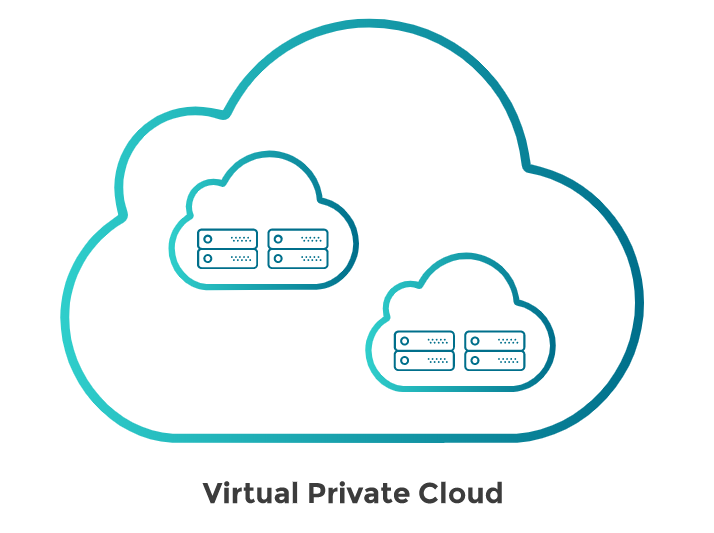
Virtual Private Cloud (VPC) is a private virtual network inside a public cloud that is segregated and safe. Offering specialized resources and improved security measures gives organizations more authority over their network configurations and data. Scalability, economy, and enhanced data security are provided via VPCs.
Let us discuss the main characteristics and elements of a virtual private cloud services provider, like subnets, gateways, virtual networks, and security groups. We will also discuss the advantages of using a VPC, such as enhanced scalability, cost-effectiveness, and data security.
Understanding the concept of virtualization
Virtual private cloud services provider is built on virtualization. Creating a virtual model of an operating system, storage component, networking resource or computing platform permits companies to govern and expand their foundation due to virtualization more efficiently. This lets them disengage their computer means from the basic hardware.
Benefits of using VPC services
A virtual private cloud service provider can help businesses take advantage of the cloud’s power while keeping control over their infrastructure and data. The following are some of the main benefits of utilizing VPC services:
Enhanced security:
Businesses can control data security to a greater extent with Private Cloud Services Virtual. Data breaches and unauthorized access are less likely because of a virtual private cloud’s specialized resources and isolated environment, which prevent data from being shared with other users.
Customizable network settings:
Virtual Private Cloud Service Provider allows businesses to customize their network settings to meet their specific requirements. This includes defining IP address ranges, creating subnets, and configuring routing tables.
Scalability and flexibility:
One of the key advantages of cloud computing, and the Best Virtual Private Cloud Services is the ability to scale resources on demand. With an on-demand computing platform, Private Cloud Services Virtual can flexibly increase or decrease their virtual machines, storage space, and other tools as their requirements fluctuate.
Cost-effectiveness:
VPC services provide cost benefits compared to conventional infrastructure located on your business premises. By taking advantage of the pooled resources available in a public cloud, companies can decrease upfront hardware costs and only pay for the capabilities they require.
Key features of VPC services
The Best Virtual Private Cloud Services Provider offers a variety of capabilities that empower companies to craft and control their virtual networking environments. These functions supply businesses the adaptability, oversight, and protection needed to maximize their cloud foundation. Some key abilities incorporate:
Virtual networks:
A digital network forms the basis of a VPC. It enables companies to craft an isolated digital environment within a public cloud infrastructure. With digital networks, companies can outline IP address ranges, subnetworks, and routing tables, allowing them to customize their network configurations to satisfy their distinct needs.
Subnets:
Subnets divide larger virtual networks into smaller, more workable pieces. This allows companies to break up their networking infrastructure according to different needs. Subnetworks can separate applications, databases, and servers so they handle distinct tasks.
Gateways:
Gateways offer connections amongst a virtual network and outside networks, letting organizations construct safe connections linking their VPC and their infrastructure located elsewhere, additional VPCs, or the World Wide Web. Gateways can serve to empower hybrid cloud designs, join remote workplaces, or grant internet admittance to assets inside the VPC.
Security groups:
Security groups act like online firewalls. They oversee incoming and outgoing data for VPC resources. Businesses use them to set specific safety rules. These rules relate to protocols, ports, and IP addresses.
Network ACLs:
Network Access Control Lists, or ACLs, add more safety to a Virtual Private Cloud, the VPC. They let companies set rules. These rules decide what traffic can come in and go out. That way, resources are extra protected.
Security considerations in VPC services
When it comes to virtual private cloud services, safety is the most important thing. Although VPCs are more secure than public clouds, companies should do more than that to protect their resources and data. Here are some security considerations you need to think of while using the VPC services:
Network isolation:
VPCs have a separate network space which is one of its main advantages over anything else. Within a VPC, by default, no resource is reachable via the internet or any other VPC.
Encryption:
Data security is not complete without encryption. When using VPC services, businesses ought to ensure that data is encrypted at rest and in transit. This can be achieved via SSL/TLS for data in transit and AES-256 as an example of encryption technology for resting data.
Access control:
Access control is essential for protecting resources within a VPC. Businesses should implement strong authentication and authorization mechanisms to ensure that only authorized users and applications can access their resources.
Setting up a VPC environment
Setting up a virtual private cloud environment involves several steps businesses must follow to create and configure their VPC resources. This is a guide that explains how you can set up a VPC environment in a step-by-step manner:
Define your requirements:
Different businesses must be able to select their Best Virtual Private Cloud Services based on their features, prices, and support.
Choose a cloud service provider:
Companies must assess various providers’ services. They should pick the one that suits their needs the best. This includes looking at features, cost, and support.
Create a VPC:
Once a cloud service provider is chosen, businesses can create a VPC within their chosen provider’s console or through an API.
Configure subnets:
This involves specifying the IP address range for each subnet and assigning them to availability zones if supported by the cloud service provider.
Configure gateways:
This refers to setting up a virtual private gateway for VPN connections site-to-site, an internet gateway for internet usage, or a NAT gateway for the internet outbound link.
Configure security groups and network ACLs:
Security groups and network ACLs should be configured by organizations depending on their security needs. This will involve identifying inbound/outbound rules governing traffic flow as well as implementing security policies to safeguard sensitive data
Connect to on-premises infrastructure:
Companies should set up a virtual private gateway and create a site-to-site VPN link when they need to link their VPC to their onsite infrastructure.
Conclusion
With VPCs or Virtual Private Cloud Services, firms can enjoy enhanced safety, tailor-made network settings, and the ability to scale. Besides, they add a touch of flexibility and are pocket-friendly. Creating segregated digital ecosystems in public cloud spaces to suit unique needs is a cinch with VPCs. Just remember, security aspects like encrypting and isolating the network need focus. It’s the only way to keep your data in safe hands.