


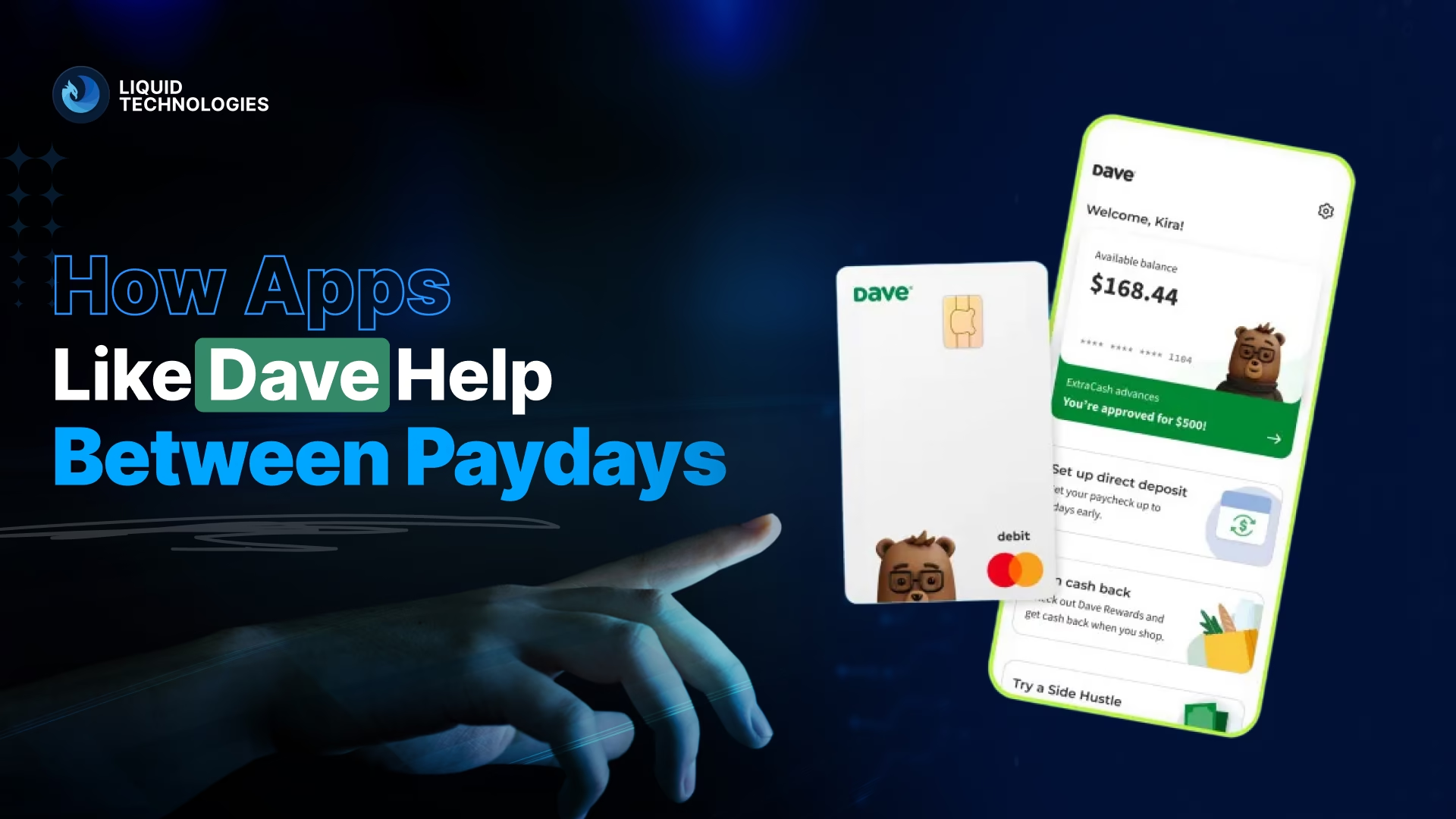
You check your bank account on Tuesday. Rent cleared yesterday, and payday isn’t until Friday. That sinking feeling hits when you realize you need gas money, groceries, and your phone bill is due tomorrow. This scenario plays out for millions of people every month, which explains why apps like Dave have exploded from niche fintech tools to mainstream financial lifelines.
These platforms aren’t just repackaged payday loans with prettier interfaces. They represent a fundamental shift in how people access their earned wages, manage cash-flow gaps, and avoid the predatory fee cycles that traditional overdraft systems perpetuate. The U.S. cash advance market is accelerating. Statista expects it to hit $28.29 billion in transactions by 2025. That’s a huge jump, and it shows just how quickly things are changing.
Key Takeaways
- Apps like Dave provide cash advances of $20-$500 without traditional credit checks or mandatory interest charges
- Most platforms use subscription models ($1-$10 monthly) instead of per-transaction fees
- Download statistics show over 150 million combined installs across top alternatives
- Instant transfer speeds vary dramatically, from 1 hour to 3 business days, depending on the service
- Banking integration requirements differ, with some apps needing direct deposit verification
- Advanced features now include credit building, budgeting analytics, and automated savings
- Regulatory frameworks continue evolving, making some apps unavailable in certain states
Why Traditional Banking Falls Short When Emergencies Hit
Banks operate on industrial-age infrastructure while life happens at digital speed. Your employer deposits funds every two weeks, but your car doesn’t schedule breakdowns around payday. Credit cards charge 18-24% APR for the privilege of bridging that gap, while traditional overdraft fees average $35 per transaction.
Money apps like Dave emerged specifically to solve this timing mismatch. They connect directly to your checking account, analyze your income patterns using machine learning, and advance you money you’ve already earned but haven’t received yet. The transaction happens in your pocket while you’re standing at the pharmacy counter.
The psychology matters here. When you know exactly when money arrives and can access it predictably, you make different decisions. You don’t skip meals to save $8. You don’t let that medical bill go to collections due to a two-day gap.
The Technical Architecture Behind Instant Advances
These platforms integrate with banking APIs (typically Plaid or MX) to read transaction history, verify employment patterns, and calculate available advance amounts. Unlike traditional lenders checking FICO scores, they’re analyzing cash flow velocity, how money moves through your account, rather than how much debt you carry elsewhere.
Risk models focus on repayment probability based on the consistency of direct deposit. If your employer deposits $1,200 every other Friday without fail, the algorithm sees lower risk than someone with irregular gig income, even if the gig worker has better credit scores.
11 Best Money Apps Like Dave
Earnin
App Store Rating: 4.7/5
Play Store Rating: 4.5/5
Downloads: 15 million+
Earnin operates on a radical premise: tips instead of fees. You decide how much to pay (including $0) after you receive your advance. The company pioneered location tracking that verifies you actually worked the hours you’re advancing against, though this feature raised privacy concerns among some users.
The Lightning Speed feature delivers funds within minutes for a small fee, while standard transfers arrive next business day. Maximum advances reach $750 per pay period for users who enable all income streams and maintain consistent work patterns.
Best for: Hourly workers with variable schedules who need flexibility in advance amounts and repayment timing.
| Pros | Cons |
| No mandatory fees or interest charges | Tipping culture can feel psychologically manipulative |
| Up to $750 advance limit for verified users | Lightning Speed transfers carry $1.99-$4.99 fees |
| Cash Out tool works 24/7, including weekends | Location tracking required for hourly workers |
Brigit
App Store Rating: 4.6/5
Play Store Rating: 4.3/5
Downloads: 3 million+
Brigit’s algorithm predicts when your account may go into the negative and automatically transfers funds to prevent overdrafts. The platform focuses heavily on credit building by reporting your on-time repayments to major credit bureaus, which traditional cash advance apps like Dave and Earnin typically don’t.
The subscription model ($9.99 monthly) includes unlimited $250 advances, budgeting tools, and identity theft protection. Users particularly appreciate the financial health score that updates daily based on spending patterns and saving behaviors.
Best for: People who frequently overdraft and want automated protection plus credit-building benefits.
| Pros | Cons |
| Automatic overdraft detection and prevention | Higher monthly fee compared to competitors |
| Reports to credit bureaus to build credit history | Lower advance limit than some alternatives |
| Includes identity theft monitoring in the subscription | Requires a 60-day account history before th first advance |
For those exploring broader money management solutions, check out our guide on the Best App Like Brigit to Find the Right Money Management Alternative.
MoneyLion
App Store Rating: 4.7/5
Play Store Rating: 4.4/5
Downloads: 10 million+
MoneyLion started as a loan app like Dave but evolved into a comprehensive financial platform. The free tier offers $100-$250 advances (Instacash), while paid memberships ($19.99/month) unlock $500 advances, 5.99% APR personal loans, and managed investment accounts.
The Credit Builder Plus program combines forced savings with credit reporting. You take out a small loan. MoneyLion holds the funds in an account you can’t access until it’s repaid, then reports those payments to build your score while you actually build savings.
Best for: Users wanting an all-in-one platform for advances, investing, credit building, and traditional loans.
| Pros | Cons |
| Free tier provides meaningful advance amounts | Account history requirements can delay access |
| 0% APR advances with no tips required | Premium tier pricing adds up annually |
| Integrated investing and savings accounts | Some features are locked behind membership levels |
Discover how MoneyLion compares to similar ecosystems in our blog on Best Apps Like MoneyLion for Everyday Finance.
Chime SpotMe
App Store Rating: 4.8/5
Play Store Rating: 4.6/5
Downloads: 50 million+
Chime technically isn’t a standalone advance app; it’s a full neobank with built-in fee-free overdraft protection. SpotMe covers debit card purchases and cash withdrawals up to $200 with no fees, no interest, and no credit check.
The brilliance lies in integration. You’re not juggling two apps or waiting for transfers between accounts. SpotMe activates automatically when you’re short, and repayment happens invisibly when your next direct deposit arrives. Limits increase based on account activity and direct deposit amounts.
Best for: People ready to switch their primary checking account to access seamless overdraft protection.
| Pros | Cons |
| No separate app or transfer delays | Requires switching to Chime as the primary bank |
| Zero fees on covered overdrafts | Initial limit ($20) increases slowly |
| Limit increases with account usage | Must have recurring direct deposits |
Possible
App Store Rating: 4.6/5
Play Store Rating: 4.2/5
Downloads: 1 million+
Possible operates differently from typical cash advance platforms. It provides installment loans ($50-$500) repayable over four installments aligned with your pay schedule. APRs reach 150-200%, which may seem high until you compare them with traditional payday loans (300-400% APR) or overdraft fee equivalents (over 3,000% APR for small amounts).
What sets Possible apart is flexibility. You can reschedule payments up to 8 times per loan without penalties, and the company reports to credit bureaus, turning emergency borrowing into credit-building opportunities.
Best for: People with poor credit who need slightly larger amounts with flexible repayment terms.
| Pros | Cons |
| Approves users with bad or no credit | Higher APR than cash advance apps |
| Reports to all three credit bureaus | Smaller maximum loan amounts |
| Eight free payment rescheduling options | Not available in all states |
Learn more about ethical payday alternatives in our comprehensive guide: Best Apps Like Possible for Modern Alternatives to Payday Loans.
Empower
App Store Rating: 4.5/5
Play Store Rating: 4.3/5
Downloads: 2 million+
Empower combines cash advances ($10-$300) with sophisticated budgeting tools and automatic savings transfers. The AI analyzes your spending patterns, identifies wasteful subscriptions, and negotiates bills on your behalf, features typically found in separate apps.
The $8 monthly subscription feels justified when you factor in the bill negotiation service alone, which saved users an average of $300 annually according to 2025 data. Advances arrive via instant transfer for a $1- $8 fee, depending on the amount, or free via standard ACH.
Best for: Budgeting-focused users who want advance access combined with comprehensive financial management.
| Pros | Cons |
| Automated savings based on spending patterns | Subscription required for advance access |
| Bill negotiation service included | Lower maximum advance than competitors |
| Spending insights with merchant categorization | Instant transfer fees apply |
Cleo
App Store Rating: 4.4/5
Play Store Rating: 4.0/5
Downloads: 5 million+
Cleo uses conversational AI with a sometimes brutally honest personality to help you manage money. The chatbot highlights your spending habits, celebrates saving wins, and offers advances of up to $250 through Cleo+, the $5.99 monthly subscription tier.
The platform excels at helping younger users build financial literacy through engagement rather than lectures. Cleo sends memes about your Friday night spending, creates challenges to skip daily coffee purchases, and visualizes where money actually goes versus where you think it goes.
Best for: Millennials and Gen Z users who want engaging financial guidance with advance options.
| Pros | Cons |
| Personality-driven interface increases engagement | Slower transfer (1-3 business days) |
| Lower subscription cost than many competitors | Lower advance limits than premium options |
| Strong building analytics and insights | AI tone won’t suit everyone’s preferences |
FloatMe
App Store Rating: 4.3/5
Play Store Rating: 3.9/5
Downloads: 500,000+
FloatMe simplifies complexity to solve one problem: small cash shortfalls. The $50 maximum advance won’t cover rent, but it will cover the $35 overdraft fee you’re about to incur or the grocery gap before payday.
At $1.99 monthly (one of the lowest subscriptions in this space), FloatMe makes financial sense even if you only use it twice yearly. The app analyzes your account and increases advance eligibility over time, while remaining in the micro-advance niche rather than competing on maximum amounts.
Best for: Users needing occasional small advances who want minimal subscription costs.
| Pros | Cons |
| Lowest subscription fee among competitors | $50 limit won’t cover larger emergencies |
| No tipping or “optional” fees | Slower app performance than competitors |
| Simple interface without feature bloat | Limited additional features beyond advances |
PayActiv
App Store Rating: 4.6/5
Play Store Rating: 4.4/5
Downloads: 1 million+
PayActiv works through employer partnerships rather than direct consumer relationships. If your company offers it as a benefit, you can access up to 50% of your earned wages before payday through the app, typically with no fee or a flat $5 fee, regardless of the amount.
The employer-based model creates unique advantages. There’s no underwriting, no credit checks, and no waiting period—if you worked the hours, you access those wages immediately. Some employers cover all fees as an employee benefit, making it completely free to use.
Best for: Employees whose companies offer PayActiv as a workplace benefit.
| Pros | Cons |
| Often free or flat-free regardless of the amount | Requires employer partnership to access |
| Immediate access without approval delays | Limited availability outside participating companies |
| No impact on credit or bank account requirements | Features vary based on the employer’s chosen plan |
Branch
App Store Rating: 4.5/5
Play Store Rating: 4.3/5
Downloads: 2 million+
Branch originally built tools for employers to manage shift scheduling before expanding into earned wage access. The platform excels for gig workers and contractors who face irregular income patterns that confuse traditional cash-advance algorithms.
You can access wages from completed shifts immediately rather than waiting for the company’s pay cycle. Branch partners with major gig platforms like DoorDash and Uber, automatically tracking your earnings across multiple apps and making advances available as you work.
Best for: Gig workers with multiple income streams needing consolidated advance access.
| Pros | Cons |
| Multi-platform income tracking | Primarily benefits gig economy workers |
| Same-day access to gig earnings | Limited features for traditional employees |
| No monthly subscription fees | Some partner platforms have usage restrictions |
Albert
App Store Rating: 4.6/5
Play Store Rating: 4.2/5
Downloads: 3 million+
Albert positions itself as a comprehensive financial advisor in your pocket. The $14.99 Genius subscription (highest on this list) includes unlimited $250 advances, access to human financial advisors, automated investing, savings optimization, and bill negotiation.
The value proposition targets users who’d otherwise pay for multiple separate services. Instead of Mint for budgeting, Betterment for investing, and Trim for bill negotiation, Albert bundles everything into one experience, with loan apps like Dave functionality added.
Best for: Users seeking comprehensive financial management and willing to pay a premium price.
| Pros | Cons |
| Human financial advisors are included in the subscription | The highest subscription cost was reviewed |
| Automated investing with personalized strategies | Lower the advance limit given the price |
| High-quality budgeting and analytics tools | Feature overlap may exceed some users’ needs |
For broader comparisons of advanced apps with shopping flexibility, see our analysis of Apps Like Afterpay, including their features, market fit, and app development.
How These Apps Actually Make Money (And Why It Matters)
Understanding revenue models helps explain why features, limitations, and user experiences differ so dramatically. Earnin relies on voluntary tips and premium features (Lightning Speed). Chime makes money from interchange fees when you swipe your debit card. MoneyLion cross-sells loans, investments, and insurance products. Brigit charges subscription fees.
This matters because revenue models create incentives. Subscription-based platforms remain profitable regardless of whether you use their advanced features, so they focus on retention through additional features. Tip-based models rely on you feeling sufficiently grateful to pay voluntarily. Interchange-dependent neobanks want you to use their debit card constantly.

The healthiest relationships emerge when incentives align. You want affordable access to your money; the company wants sustainable revenue that doesn’t depend on your financial stress. Watch for misaligned incentives, such as platforms that profit more when you borrow more or pay late.
Building Smarter Financial Tools With Liquid Technologies
While apps like Dave solve immediate needs, the broader question is: how should modern financial tools actually work? At Liquid Technologies, we approach this not as a development challenge but as a thinking problem.
Our mobile app development philosophy centers on asymmetric value creation, building platforms that provide exponentially more value to users than they extract in fees or data. When we architect financial tools, we’re designing incentive structures that succeed only when users’ financial health improves.
Our development team has built prototypes that combine elements from leading apps in this space while eliminating pain points. The future of financial tools isn’t about building better cash advance apps. It’s about creating systems where advances become unnecessary because money flows align with life’s natural rhythm.
Want to explore how smarter financial architecture could transform your existing product? The conversation starts with examining why current solutions fail and what thinking differently could unlock.
How to Choose the Right App for Your Specific Situation
Your individual circumstances should drive your choice more than any generic ranking.
- If you have variable-hour work with weekly schedule changes, Earnin’s ability to track hours worked in real time and advance payments against shifts you’ve completed (not just static salary amounts) makes it superior to platforms that require direct deposit verification.
- If you frequently trigger overdrafts without realizing it, Brigit’s predictive analytics and automatic transfers prevent the problem rather than reacting to it. Worth the higher subscription cost if you’re currently paying $70-$140 per month in overdraft fees.
- If you’re trying to build credit and fix poor scores, Possible’s reporting to credit bureaus turns your emergency borrowing into credit-building activity. The higher APR becomes an investment in improving your credit profile.
- If your employer offers PayActiv: Use it. The employer-integrated model typically offers the best terms since your company may subsidize fees as an employee benefit.
- If you need small amounts infrequently, FloatMe’s $1.99 monthly fee beats Brigit’s $9.99 fee when you only need $30-$50 twice a year.
- If you want comprehensive financial management beyond just advances, Albert or MoneyLion justify their higher costs through bundled features that replace multiple apps.
- If you’re ready to switch banks entirely for built-in overdraft protection, Chime eliminates the complexity of managing separate platforms and transfers.
Match the tool to your actual usage pattern, not the one you aspire to.
Conclusion
The explosion of apps like Dave didn’t happen because marketing teams convinced people they needed something new. It happened because traditional banking created a genuine problem: your employer pays you every two weeks, but life operates on a daily schedule. These platforms solved that timing mismatch in ways that banks had fifty years to figure out but never bothered.
Whatever you choose, approach it as a temporary bridge, not permanent infrastructure. The goal isn’t to optimize which app to use permanently; it’s to build financial systems that you rarely need to use.Let’s talk about what financial tools could look like if we started by questioning every assumption. Partner with Liquid Technologies to build solutions that matter.


